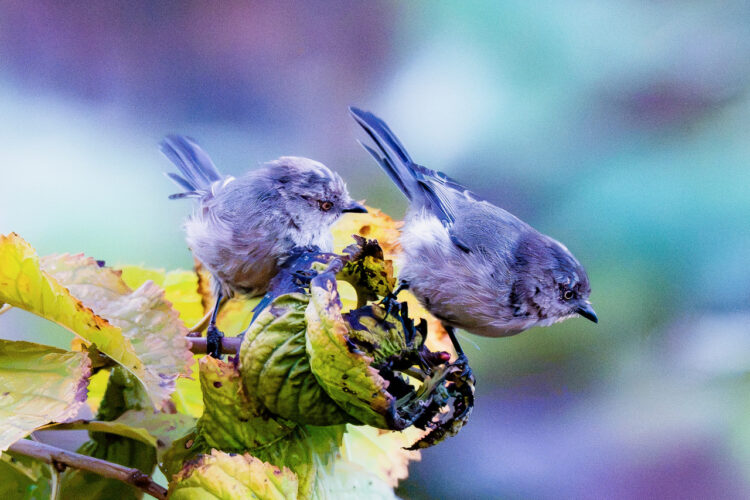
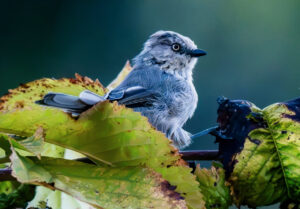
Bushtits (Psaltriparus minimus) are tiny non-migratory songbirds found along the southeastern coast of Vancovuer Island, including areas around Parksville and the Fairwinds Community in Nanoose Bay.
Key Characteristics & Appearance
- Size: Very small, measuring about 7 to 11 cm (3 to 4.5 inches) long and weighing only 4 to 6 grams (similar to a hummingbird).
- Plumage: Plain grey-brown bodies, dark tails and wings, and lighter underparts.
- Eye Color (Sexual Dimorphism): Adult females have light-colored eyes (cream, yellow, or white), while adult males have dark/black eyes. [1, 2, 3, 4]
Behavior & Habitat
- Flocking: Outside of the spring breeding season, they travel in tight, active flocks of 5 to 30+ birds, often mixing with other small woodland species like kinglets or chickadees.
- Foraging: Constantly on the move through trees and shrubs, frequently hanging upside down acrobatically to glean small insects, spiders, scale insects, and larvae from leaves.
- Vocalizations: Constantly emit soft, high-pitched chips, twitters, and bell-like notes to keep the flock connected.
- Roosting & Cold Weather: At night, they huddle tightly together in large groups to stay warm during cold weather.
Nesting
- Nests: Build remarkable, pendant (hanging), sock- or jug-shaped sac nests that can extend up to a foot below a branch.
- Materials: Woven out of moss, grasses, and spiderwebs, and heavily lined with soft insulation like down, fur, or feathers.
- Cooperative Breeding: Breeding pairs are sometimes assisted by extra helper birds (often lone adult males) that help build the nest and raise the young.
Status on Vancouver Island
- Bushtits expanded their range northward onto southeastern Vancouver Island (reaching areas like Victoria, Nanaimo, Nanoose/Fairwinds, and up toward Campbell River) over recent decades.
- They readily adapt to suburban gardens, parks, and scrubby woodland edges where shrubs and insect life are plentiful.
Photography Credit to Michael Kenyon


